Craft & Utility
54 Restaurant Marketing Ideas That Actually Fill Tables
54 practical restaurant marketing ideas: free foundations, retention, menu, promotions through the year, local, ideas by type of restaurant, and paid channels, each with a rough cost and effort.
The best restaurant marketing ideas are not clever campaigns — they are a handful of mostly free habits that make you findable, worth choosing, and easy to come back to, with paid ads added on top only once those are working. Below are 54 ideas that actually fill tables, grouped by where they pay off, with ideas for your type of restaurant and for promotions through the year. Start at the top: the free foundations return more than anything you can buy. Each idea links to a deeper how-to when you are ready to act on it.
Every idea carries a rough cost and effort so you can pick what fits this week:
- Cost: Free means time only. Low means a small one-off spend or a few dollars a day. Medium means a real line in your monthly budget.
- Effort: Low is an afternoon to set up, then minutes a week. Medium is a few hours a week. High is an ongoing project with someone owning it.
If you are looking specifically for paid and local promotion, the restaurant advertising guide covers every channel and how much to spend.
We sell nothing here, so this is the neutral list — ideas ranked by what works for the operator, not by what makes us a commission.
Free foundations (start here — they beat paid ads)
These reach high-intent local diners at no media cost, and every restaurant should max them out first.
- Complete your Google Business Profile. The free listing that powers the map results diners see first. Fill every field, add photos and your menu, and keep it current — the full playbook is in the Google Business Profile guide. Cost: free. Effort: low.
- Turn reviews into a habit. Ask happy guests to review you, and respond to every review, good or bad. Reviews drive both local ranking and diner choice — see how they fit into restaurant SEO. Cost: free. Effort: low.
- Win local search. Optimize your site and listings for "restaurants near me" and your cuisine plus your city so you show up in the local pack. Start with the restaurant SEO guide. Cost: free. Effort: medium.
- Post real food photos consistently. A steady feed of appetizing dishes builds familiarity and gives people a reason to choose you. See restaurant social media and how to shoot your own food well. Cost: free. Effort: medium.
- Build an email list from day one. The one audience you fully own. Collect addresses in-house and online so you can bring guests back for free — the how-to is in restaurant email marketing. Cost: free to low. Effort: low.
- Claim your listings everywhere diners look. Google, Yelp, and the delivery apps. Keep your name, address, phone, and hours identical across all of them so neither diners nor Google get confused. Cost: free. Effort: low.
- Put your menu on your website as text, not a PDF. A text menu loads fast on a phone, can be read by search engines, and is easy to update when a price changes. Add prices and a photo of your best dishes. Cost: free. Effort: low.
Bring guests back (retention ideas)
A first-time guest who never returns is a marketing loss. These turn visits into habits.
- Send welcome, birthday, and win-back emails. Simple automated messages that greet new subscribers, celebrate birthdays, and re-invite lapsed guests — the campaigns that quietly build regulars. See restaurant email marketing. Cost: low. Effort: low once set up.
- Launch a simple loyalty program. A punch card, points, or an app-based reward gives people a reason to come back to you instead of the place next door — the options are in restaurant loyalty programs. Cost: low. Effort: medium.
- Start an SMS list for same-day specials. Texts get opened fast, which makes them ideal for filling a slow night with a timely offer. Only text people who opted in. Cost: low. Effort: low.
- Make regulars feel like VIPs. Remember names and orders, and give your most loyal guests small perks. Recognition is cheap and it is why people stay loyal. Cost: free. Effort: low.
- Reward referrals. Give happy guests an easy reason and a small incentive to bring a friend. Word of mouth is still the most trusted advertising there is. Cost: low. Effort: low.
- Sell gift cards, and push them in December. Gift cards bring cash in up front and bring a new guest through the door when they are spent. Sell them at the till and online, and promote them before the holidays. Cost: low. Effort: low.
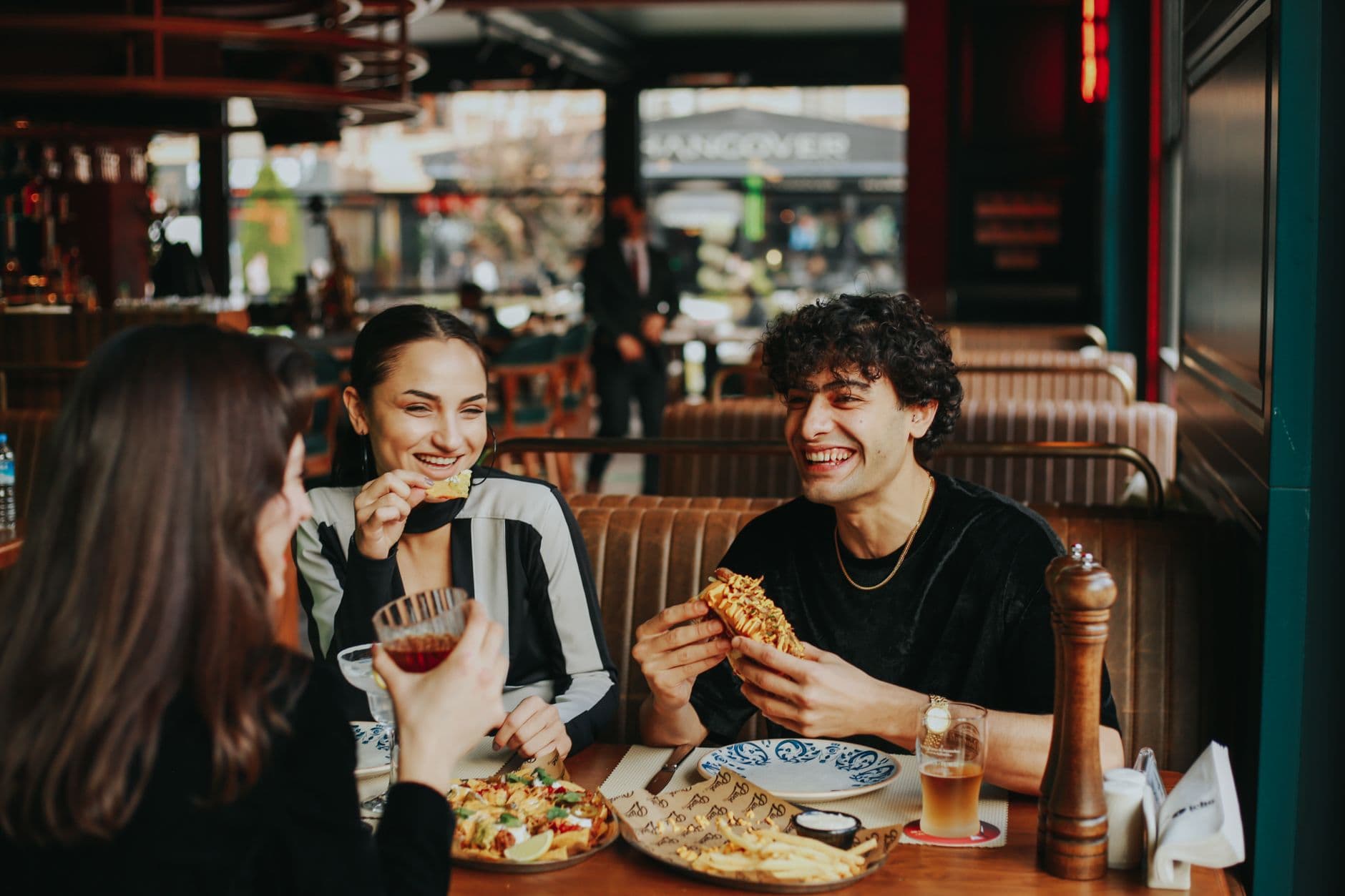
 Two friends enjoying a meal together at a restaurant
Menu and pricing ideas
Your menu is a marketing tool, and small changes to it move real money.
- Engineer your menu to sell your best dishes. Sort dishes by popularity and profit, then design the menu to steer guests toward the winners — the full method is in menu engineering. Cost: free. Effort: medium.
- Create a signature dish worth traveling for. One memorable, ownable item gives people a specific reason to choose you and something to tell their friends about. Cost: free. Effort: medium.
- Run limited-time specials. A seasonal dish or a limited-time offer creates urgency and a fresh reason to visit, and gives you something new to post and email about. Cost: low. Effort: low.
- Bundle combos and prix-fixe deals. Thoughtful bundles raise the average check and make ordering easier — just make sure the math still protects your margin. Cost: free. Effort: low.
- Add a family meal or kids-eat-free night. A family bundle for takeout, or one night a week when kids eat free with a paying adult, gives parents a reason to pick you on a quiet evening. Price it so the adults' orders carry it. Cost: low. Effort: low.
Promotion and event ideas through the year
Promotions work when they give people a specific reason to come in now. Plan them on a simple calendar so you are never inventing one the week before.
- Fill your slowest night with one standing offer. Look at your sales by day, pick the quietest night, and give it a repeatable hook: a set menu, a half-price bottle, a local's night. Keep it for at least a month before you judge it. Cost: low. Effort: low.
- Run a happy hour with a clear window. Discounted drinks and small plates in a fixed early-evening window bring in the after-work crowd and fill seats before dinner. Check your local alcohol rules before advertising drink prices. Cost: low. Effort: low.
- Keep a 12-month marketing calendar. Mark the dates that matter to your guests (Valentine's Day, Mother's Day, Father's Day, graduation season, Thanksgiving, the December holidays, local festivals and game days) and plan an offer, a post and an email for each, six weeks ahead. Cost: free. Effort: low.
- Take holiday pre-orders. Turkey dinners, holiday platters, pies and party trays sold in advance smooth out the busiest weeks and bring in cash before you cook. Open pre-orders early and set a firm cut-off. Cost: free. Effort: medium.
- Plan a soft opening and a grand opening. A friends-and-family soft opening lets the team practice on a forgiving crowd; a grand opening a few weeks later, with an offer and local press and creators invited, tells the neighborhood you are ready; put both in your opening budget. Cost: medium. Effort: high.
- Celebrate your anniversary. A birthday for the restaurant is a ready-made reason to thank regulars: a throwback dish, an anniversary price or a party. Cost: low. Effort: low.
- Give weekdays a theme. A named night ("Taco Tuesday", "Pasta Wednesday") is easy to remember and easy to post about every week. Cost: low. Effort: low.
- Run a simple giveaway on social. A dinner for two in return for following you and tagging a friend can grow a local audience fast. Follow each platform's promotion rules and keep the entry steps short. Cost: low. Effort: low.
- Collaborate with another chef or a local producer. A one-night collaboration menu, a pop-up with a neighbouring bakery, or a dinner with a local brewery reaches the other side's regulars as well as yours. Cost: low. Effort: medium.
 Candlelit long tables being set for a special dinner event
Social and content ideas
- Shoot better food photos on your phone. Good light and a fresh plate beat an expensive camera — the practical guide is food photography for restaurants. Cost: free. Effort: low.
- Show the people and the kitchen. Behind-the-scenes moments, your team, and how a dish is made build a connection a polished ad cannot. Cost: free. Effort: low.
- Post short vertical video. Ten to thirty seconds of a dish being plated, a pour, or a busy Friday works on Instagram Reels, TikTok and Facebook at once. Film vertically and put the dish in the first second. Cost: free. Effort: medium.
- Encourage guests to post and tag you. User-generated photos are free, trusted advertising. Make your space photogenic and gently prompt tags. Cost: free. Effort: low.
- Partner with local food creators. A well-matched local influencer or food blogger can put you in front of exactly the right nearby audience — see restaurant social media. Ask them to disclose a free meal or payment. Cost: low. Effort: medium.
- Reply to every comment and message. Responsiveness signals a place that cares, and it turns passive followers into guests. Cost: free. Effort: low.
Local and community ideas
- Partner with nearby businesses and hotels. Cross-promotion, a shared offer, or being the recommended spot for a nearby hotel sends warm local traffic your way. Cost: free. Effort: low.
- Sponsor a local team, school, or event. Real-world visibility and goodwill in exactly the community you serve. Cost: low to medium. Effort: low.
- Host events. Trivia, tastings, live music, a cooking class or a chef's table fills slow evenings and gives people a fresh reason to come in. Cost: low. Effort: medium.
- Use a sidewalk chalkboard for daily specials. Cheap, flexible, and urgent — it turns passing foot traffic into diners. More simple formats are in the restaurant advertising guide. Cost: low. Effort: low.
- Get onto local "best of" lists and food blogs. A mention in a neighborhood guide or local publication carries trust that paid ads cannot buy. Cost: free. Effort: medium.
- Offer catering to local offices. A short catering menu for meetings and office lunches fills the quiet middle of the week. Drop a menu and a tasting box to the offices nearest you. Cost: low. Effort: medium.
- Take a stall at markets and food festivals. A farmers market or festival stall puts your food in front of hundreds of local people who may never have walked past your door. Bring cards with your address and a first-visit offer. Cost: medium. Effort: high.
 A warm, illuminated restaurant storefront inviting passersby in the evening
Ideas by type of restaurant
The ideas above work almost anywhere. These fit particular formats.
 Customers ordering at the window of a food truck on a sunny day
Food trucks
- Publish your weekly schedule in the same places every week. Post where you will park on Instagram, Facebook and your Google Business Profile, at the same time each week, so regulars know where to find you. Cost: free. Effort: low.
- Park where the crowds already are. Breweries without kitchens, office parks at lunch, and events that need food are standing audiences. Build a short list of hosts and rotate through them. Cost: free to low. Effort: medium.
Coffee shops and cafes
 Customers chatting with a barista across a coffee shop counter
- Win the morning commute with order-ahead. Let regulars order on their phone and skip the line; for a cafe that lives on repeat morning visits, speed is the marketing. Pair it with a stamp card. Cost: low. Effort: medium.
- Sell your beans and merchandise. Bags of your house coffee and a branded cup put your name in people's kitchens and offices every day. Cost: medium. Effort: low.
Bars and pubs
 Friends sharing beers and snacks at a pub table
- Build anchor nights. A weekly quiz, a live-music night and big games on the screens give regulars a fixed reason to come back every week. Promote each one the same way, every week. Cost: low. Effort: medium.
Bakeries
 Fresh breads and pastries on display in a bakery
- Take pre-orders and show off custom work. Holiday pre-orders and a photo gallery of custom cakes on your website and Instagram turn one-off buyers into planned orders. Cost: free. Effort: medium.
Pizzerias and takeout
- Move regulars to your own ordering. Third-party delivery apps charge commission on every order. Put a "order direct" card in every bag and a small reward for ordering on your own site, so repeat customers come to you directly. Cost: low. Effort: medium.
Fine dining
- Host wine and tasting dinners. A paired dinner with a winemaker or a seasonal tasting menu gives food lovers a date to plan around and gives local press a story. Cost: medium. Effort: high.
Hotel restaurants
- Market to locals, not just guests. Give the restaurant its own Google Business Profile, entrance signs and reasons for locals to visit, such as a weekend brunch or a happy hour, so it is not invisible to anyone not staying the night. Cost: low. Effort: medium.
Delivery-only and ghost kitchens
- Treat your delivery-app listing as your storefront. With no dining room, the listing is all a customer sees: real photos of every main dish, clear descriptions and fast replies to reviews decide whether people order. Cost: free. Effort: medium.
Paid ideas (add once the free work is humming)
Paid channels buy reach and speed. Layer them on top of the foundations, and spend only where you can measure a return. For how much to spend, read the restaurant advertising overview, and remember that marketing lives inside the overhead slice of the 30/30/30 rule.
- Run Google search ads for "restaurants near me." Appear at the top the moment someone is actively looking for a place to eat — the highest-intent paid channel. See paid search for restaurants. Cost: medium. Effort: medium.
- Reach nearby diners with Facebook and Instagram ads. Put your food photos and offers in front of people within a few miles, from as little as a few dollars a day — the step-by-step is in Facebook ads for restaurants. Cost: low to medium. Effort: medium.
- Retarget past website visitors with display ads. Cheap banner ads that re-reach people who viewed your site or menu but did not book — usually the highest-return use of display and banner ads. Cost: low. Effort: medium.
- Test promoted placements on the delivery apps. The big delivery apps sell promoted placement and offers inside their apps. Run one short, measured test and keep it only if the extra orders cover the fees and commission. Cost: medium. Effort: low.
How to choose which ideas to run
You cannot do all 54 at once, and you should not try. Work top-down: get the free foundations solid, add one or two retention and menu ideas, plan a few promotions on your calendar, and only then layer on paid reach. Pick a small number, do them consistently, and measure what actually fills tables — then move your time and money toward whatever works.
For the complete picture of how these pieces fit into a marketing plan, start with the complete restaurant marketing guide.
Frequently asked questions
What is the single best marketing idea for a restaurant?
If you can only do one thing, complete and actively maintain your Google Business Profile and collect reviews. It is free, and it puts you in the map results diners see first when they search for somewhere to eat nearby. Nothing else offers the same return for the same cost. Once that is handled, the next best moves are also nearly free: build an email list to bring guests back, and post real food photos consistently. Paid ads can help, but the highest-return restaurant marketing usually costs time, not money.
How can I promote my restaurant with no budget?
Plenty of the most effective restaurant marketing costs nothing but effort. Complete your Google Business Profile, ask happy guests for reviews and respond to them, post appetizing food photos on Instagram and Facebook, and build an email list to bring people back with specials and events. Add local SEO on your website, encourage word of mouth, and partner with nearby businesses. None of these require ad spend — they require consistency, and together they out-perform a lot of paid campaigns.
How do restaurants attract more customers?
Three things, in order: be findable, be worth choosing, and bring people back. Findable means winning local search — a complete Google Business Profile, reviews, and local SEO, since that is where same-day diners look. Worth choosing means a clear reason to pick you: a signature dish, a distinct atmosphere, a fair price. Bring them back means owned channels like email and loyalty so a first visit becomes a habit. Paid advertising adds reach on top, but those three do most of the work.
What are good restaurant promotion ideas?
Promotions work best when they give people a specific reason to come in now. Effective ones include limited-time specials and seasonal dishes, combo or prix-fixe bundles, slow-night deals (like a Taco Tuesday), holiday and event bookings such as Valentine's or Mother's Day, a loyalty reward, and a grand-opening or anniversary celebration. Pair any promotion with an appetizing photo and one clear call to action, and push it across your email, social, and window at the same time.
How do you market a small or new restaurant?
Start with what costs time, not money: a complete Google Business Profile, reviews, a text menu on your website, and an email list from the first day. For a new restaurant, run a friends-and-family soft opening, then a grand opening a few weeks later with an offer and local press and food creators invited. Add one standing offer on your slowest night, partner with nearby businesses, and only then test small paid ads with a clear way to measure them.