Retention & Owned Channels
Restaurant Social Media Marketing: What to Post and When
Restaurant social media marketing for busy operators: which platforms matter, how to set up Instagram, what to post, a weekly posting plan you can keep, and how to tell if it is working.
Restaurant social media works when it is consistent, visual, and genuinely two-way — and it fails when it becomes a daily chore you cannot sustain. You do not need to be on every platform or post every day. You need one or two channels where your diners actually are, a steady rhythm of real photos and personality, and quick replies to the people who engage. This guide gives you a realistic system a busy operator can actually keep up.
It is part of building repeat business — social sits alongside email and loyalty in the full marketing picture. Here we focus on doing social well without burning out.
Pick your platforms — one or two, not all of them
The most common social media mistake restaurants make is spreading across five platforms and doing none of them well. Choose based on where your diners are and what you can sustain:
| Platform | Best for | Effort |
|---|---|---|
| Appetizing food photos, stories, reels; the default for most restaurants | Medium — mostly photos | |
| Events, specials, an older local audience, reviews and check-ins | Low to medium | |
| TikTok | Personality, behind-the-scenes video, reaching new local diners | Higher — video-first |
For most restaurants, Instagram plus Facebook is the sensible core. Add TikTok only if short video genuinely appeals to you, because half-hearted video is worse than none. It is far better to run one platform well than three badly.
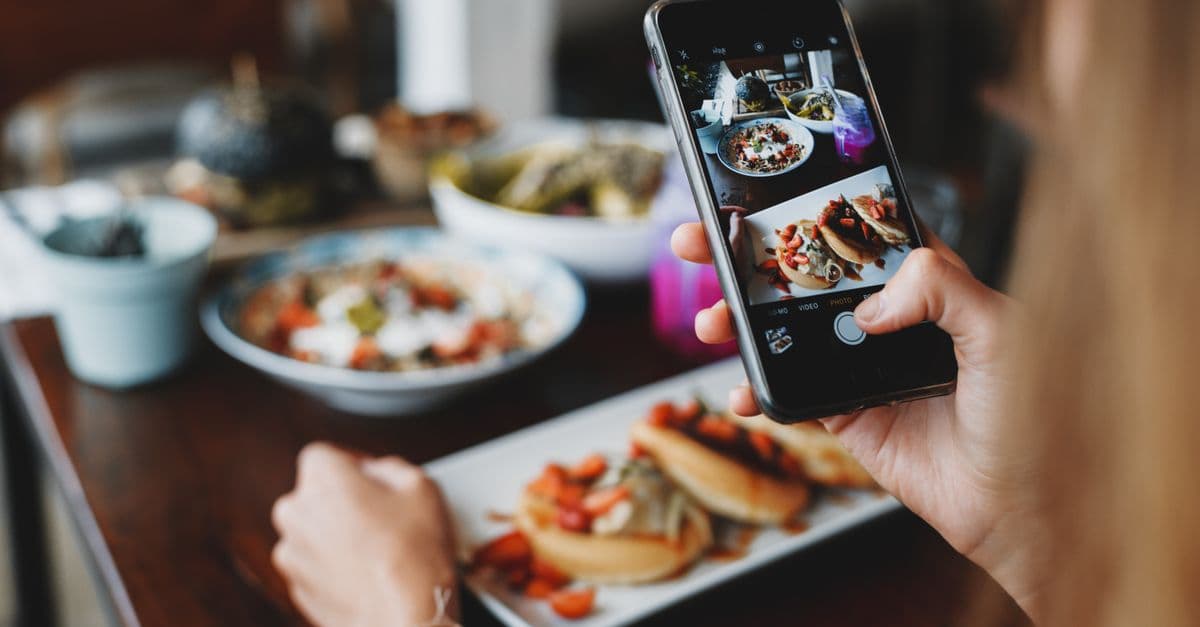
 A hand holding a smartphone showing social media apps
Instagram for restaurants: set it up once
For most restaurants Instagram is the main channel, so set the profile up properly before you post:
- Use a business or creator account so you get insights and contact buttons.
- Write the bio for a hungry stranger: what you serve, the neighborhood, your hours or "open tonight till 10", and one link to the page that matters most, usually your menu or booking page.
- Add Story highlights for the things people check before they visit: menu, hours, events, private dining.
- Tag your location on every post so people browsing your area can find you.
- Use collaborative posts with local creators, producers and neighboring businesses, so one post appears on both accounts.
- Pin your best three posts to the top of the grid: a signature dish, the room, and what is on this month.
Then post to the plan below. Reels (short vertical video) suit dishes being made and a busy service; Stories suit today's special and behind-the-scenes moments that do not need to last.
What to post: the 80/20 mix
The best restaurant feeds are not a wall of promotions. Follow the 80/20 rule: roughly 80 percent of your posts should add value — appetizing food, behind-the-scenes moments, your team, your neighborhood — and only about 20 percent should directly sell a special, event, or reservation. A feed that only pushes offers loses followers; a feed that mostly delights them earns the right to promote occasionally.
A simple content menu you can rotate:
- The food. Your best-looking dishes, close and well-lit. This is the core of every restaurant feed. Good food photography is the single biggest lever here, and you can shoot most of it on a phone.
- The people. Chefs plating, the team at pre-shift, a bartender building a signature drink. People make a restaurant feel human.
- Behind the scenes. Market runs, prep, a new dish being developed. Diners love a peek backstage.
- User content. Repost guests' photos and tags (with credit and permission). Free, authentic, and it rewards the people who came in.
- Specials and events. The 20 percent — a seasonal dish, a holiday menu, live music, a reservation nudge.
A weekly posting plan
Here is one week for a typical neighborhood restaurant posting four times plus daily Stories. Swap the days to match your own quiet nights.
| Day | Feed post or Reel | Stories |
|---|---|---|
| Monday | None (batch-shoot next week's dishes in good daylight) | A prep or delivery moment |
| Tuesday | A Reel of your signature dish being plated | Tonight's special |
| Wednesday | None | A team member at work |
| Thursday | A guest photo you have reposted, with credit | Weekend booking reminder |
| Friday | The weekend: a special, an event or a "book now" | The room filling up |
| Saturday | None | Service in action |
| Sunday | A behind-the-scenes or "meet the team" post | Next week's teaser |
That is four feed posts, one of them a direct promotion, which keeps to the 80/20 mix. Shoot on Monday and schedule the week, so service never stops for a photo.
Keeping the rhythm going
Consistency beats intensity. A restaurant that posts three good times a week for a year wins over one that posts daily for a month then vanishes. A sustainable baseline:
- Post 3–4 times a week on your main platform. Batch it: shoot several dishes in one good-light session, then schedule the posts across the week.
- Use stories or short video daily if you can — they are lower-stakes than a feed post and keep you visible. A ten-second clip of a dish coming out of the kitchen is plenty.
- Spend a few minutes a day engaging. Reply to comments and messages, and interact with your local community. This is the "5-5-5" habit — comment on a few local posts, reply to your own, engage a few new accounts. Social rewards interaction, not just broadcasting.
Batching and scheduling are what make this survivable during service. Shoot in daylight, keep a small backlog of photos, and you will never be scrambling for something to post.
 A plated restaurant dish styled for a photo
Respond to everything — especially the hard stuff
Responsiveness is where restaurants win or lose on social. A prospective diner who messages "are you open tonight?" and hears nothing back goes elsewhere. Two habits:
- Reply promptly to questions and comments. Hours, reservations, dietary questions — answer fast. Speed is a competitive advantage most restaurants waste.
- Handle complaints calmly and in public first, then take it private. A measured, human reply to a negative comment reassures everyone else watching. Getting defensive, or deleting criticism, does more damage than the original complaint.
Etiquette: five things not to do
- Do not buy followers or fake engagement. It fools no one, and platforms suppress reach for it.
- Do not ignore messages and complaints. Silence reads as not caring.
- Do not post only promotions. Sell in one post out of five, not five out of five.
- Do not post misleading photos. A dish that looks nothing like the picture destroys trust the moment it hits the table.
- Do not go quiet for weeks then flood the feed. Inconsistency signals a business that has checked out.
How to tell if it is working
Followers are the easiest number to watch and the least useful. Track signals that connect to the restaurant:
- Saves, shares, and direction requests — these show real intent, not just a passing like.
- Messages and reservation clicks from your profile.
- Guests mentioning a post — "I saw the special on Instagram" is the clearest proof it works.
- Profile visits and website clicks, visible in each platform's built-in insights.
Social media is a familiarity-and-desire engine, not a direct-response machine. Its job is to keep your food in front of people and make them want to come in — an MGH survey found 45 percent of US diners have tried a restaurant for the first time because of its social media posts. Paired with a strong Google Business Profile so they can find you, and email or loyalty so they come back, it becomes one of the highest-return, lowest-cost channels you have. For where it fits against paid reach, see the advertising guide and the full restaurant marketing overview.
Frequently asked questions
How do you do social media marketing for restaurants?
Pick one or two platforms where your diners actually are — usually Instagram and Facebook, plus TikTok if you have the appetite for video — and commit to those rather than spreading thin. Post real photos and short videos of your food, your people, and your atmosphere on a consistent, sustainable schedule (a few times a week beats a daily burst you cannot keep up). Reply to comments and messages promptly, since responsiveness is what social rewards. Mix helpful and entertaining content with the occasional promotion rather than selling in every post, and use good phone photography as the raw material for all of it.
What should a restaurant post on Instagram?
Mostly your food, close up and in good light, plus the people and the kitchen behind it: chefs plating, the team, prep and new dishes. Repost guests' photos with credit. Keep direct promotions, such as specials, events and booking reminders, to about one post in five. Use Reels for short clips of dishes being made, Stories for today's specials, and Story highlights for your menu, hours and events.
What is the 5-5-5 rule for social media?
The 5-5-5 rule is an informal daily engagement routine, not an official rule, and people define it a few ways. A common version is: each day, comment on 5 posts from accounts in your community, reply to 5 comments or messages on your own posts, and engage with 5 new relevant accounts (local diners, food lovers, nearby businesses). The point is that social media rewards two-way interaction, not just broadcasting — spending a few minutes a day genuinely engaging builds more reach and goodwill than posting alone. Treat it as a habit, not a law.
What is the 80/20 rule in marketing?
The 80/20 rule (the Pareto principle) is the observation that roughly 80 percent of results come from 20 percent of efforts. In social media specifically it is often applied to content mix: about 80 percent of your posts should inform, entertain, or add value for your audience, and only about 20 percent should directly promote or sell. For a restaurant that means most of your feed is appetizing food, behind-the-scenes moments, and genuine personality, with occasional posts pushing a special, event, or reservation link. Constant selling burns out an audience; the 80/20 split keeps them following.
What are five things you should not do on social media?
For a restaurant: (1) Do not buy followers or fake engagement — it fools no one and hurts reach. (2) Do not ignore comments, messages, and especially complaints; silence reads as not caring. (3) Do not post only promotions — a feed of nothing but sales pitches loses followers. (4) Do not post low-quality or misleading photos of your food; a dish that looks nothing like the picture damages trust. (5) Do not be inconsistent — going quiet for weeks then flooding the feed signals a business that has stopped paying attention. Consistency, responsiveness, and honesty are the whole game.