Foundations
Food Cost Calculator: Price Every Dish for Profit
A free food cost calculator for restaurants: list what goes on the plate, allow for trim and waste, and see your food cost percentage and the menu price that hits your target. With the formulas, a worked example and how to set your own target.
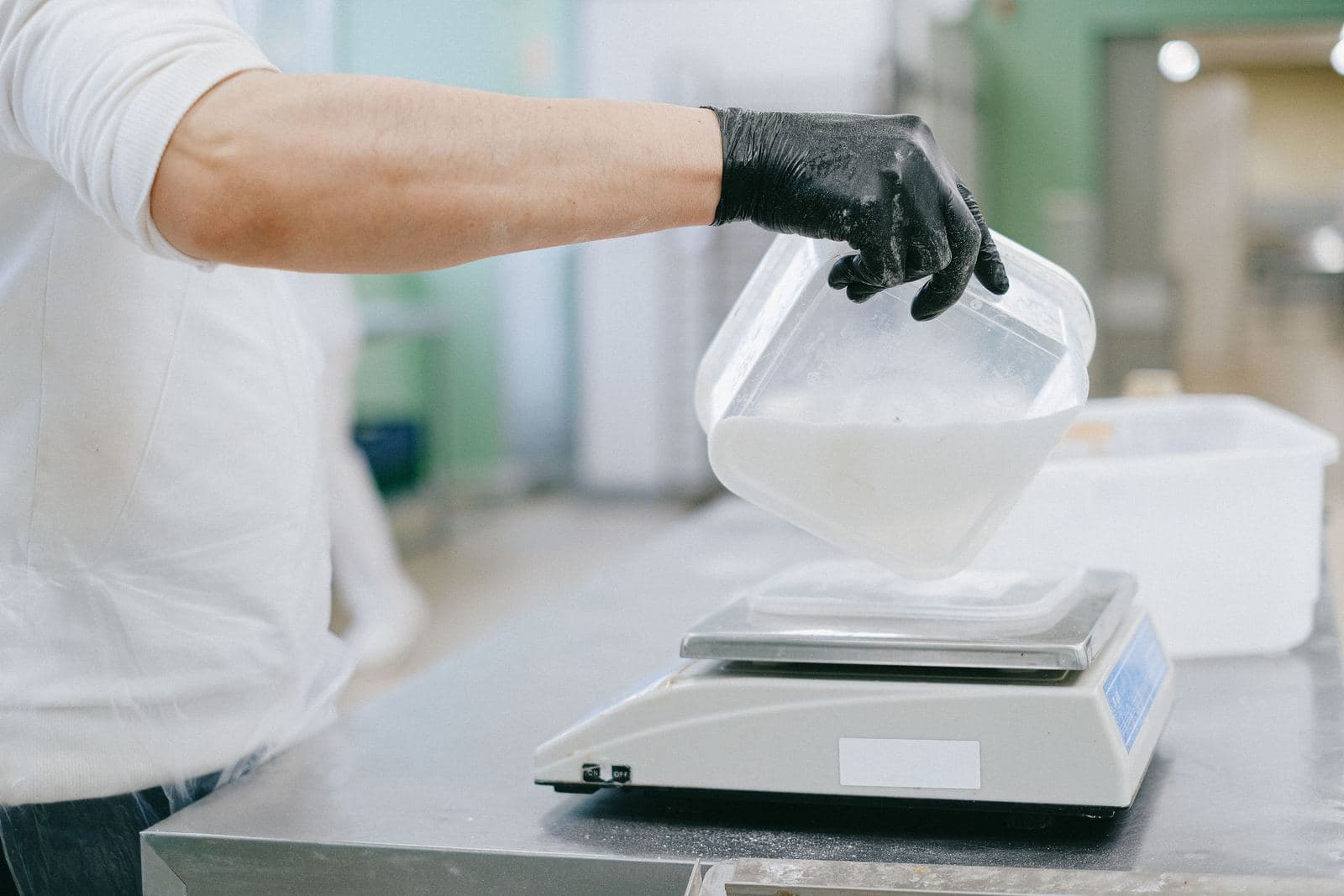
Food cost percentage is what the food on a plate costs you divided by the menu price, multiplied by 100. Enter what goes on one plate and what you charge, and the calculator below gives you the food cost percentage and the price you would need to hit your target. The formulas, a worked example and how to choose a sensible target follow.
Cost a dish and price it
List what goes on one plate. The starting dish is made up so you can see how it works; replace it with your own. Nothing is sent anywhere; the math runs in your browser.
- Plate cost
- $3.90
- Food cost at your price
- 24.4%
- Price is 4.1× the plate cost
- Price to hit 30%
- $13.00
- Your price is $3.00 above it.
The suggested price is a floor to check, not the answer. Round it, then compare it with what similar places nearby charge and what your guests will pay.
How to calculate food cost per dish
The method is the standard one taught in professional kitchens and set out in Basic Kitchen and Food Service Management, an open cookery textbook (sources at the end). In five steps:
- Write down every ingredient on one plate, with the amount used: 8 oz of chicken, 4 oz of rice, the sauce, the garnish. Small things count; a plate is usually several cents of oil, salt and garnish nobody remembers.
- Find what you pay per unit, from your latest invoices: per pound, per kilo, per each.
- Allow for yield. Most raw ingredients lose weight when you trim, peel, bone or cook them. Yield is the share you can actually serve: usable weight ÷ purchased weight × 100. If a pound of whole chicken thighs gives you 0.8 lb on the plate, the yield is 80%.
- Cost each line at its usable price: amount × cost per unit ÷ yield. Trimming makes every usable pound cost more than you paid for it.
- Add the lines. That total is your plate cost. Divide it by the menu price and multiply by 100 for the food cost percentage.
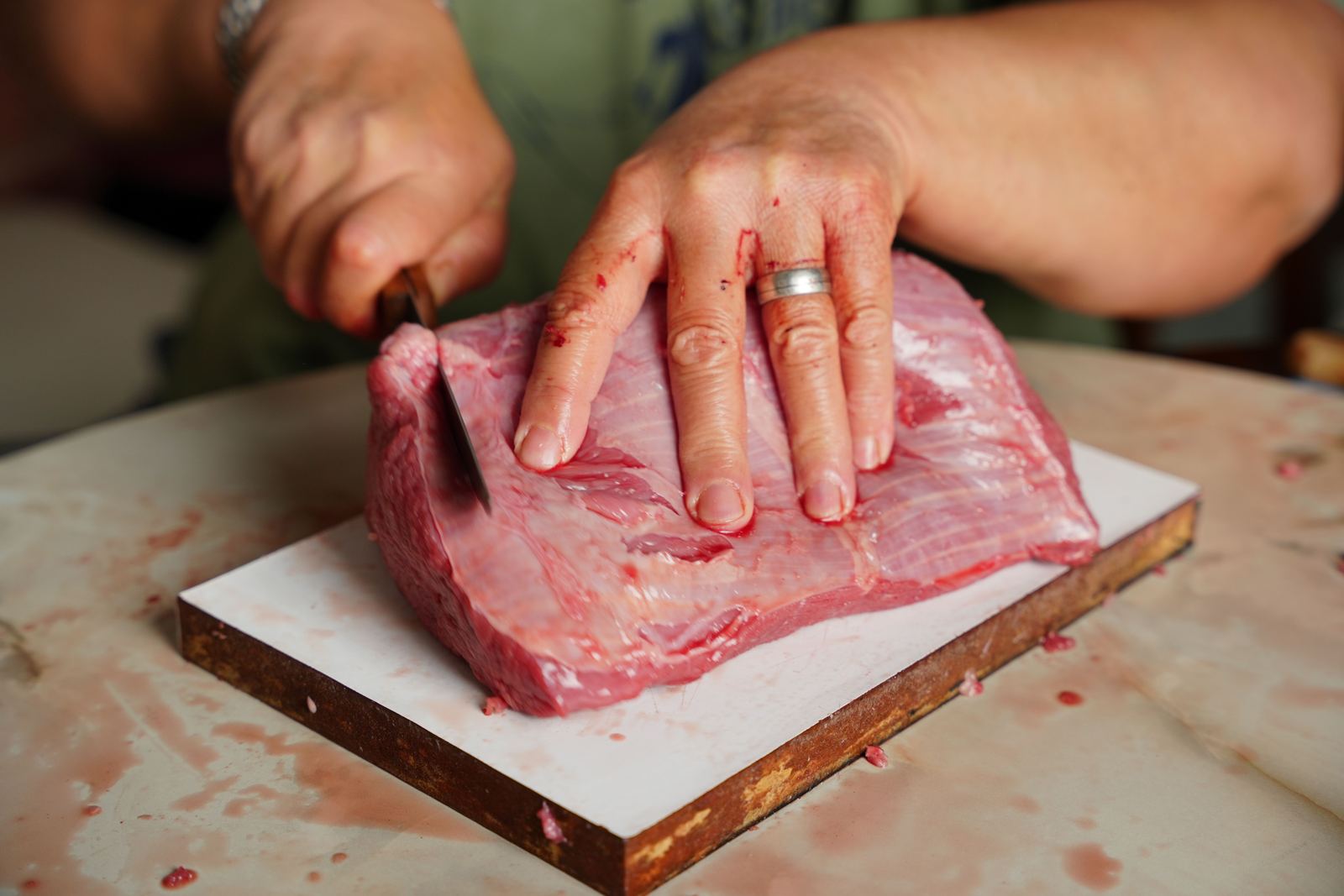 A detailed image of hands with a knife cutting a piece of raw meat on a cutting board indoors
A worked example
These figures are illustrative, made up to show the math, not prices from a real kitchen. They are the starting dish in the calculator above.
| Ingredient | Amount × cost ÷ yield | Line cost |
|---|---|---|
| Chicken thighs, $3.20/lb, 80% yield | 0.5 lb × $3.20 ÷ 0.80 | $2.00 |
| Rice, $1.20/lb | 0.25 lb × $1.20 | $0.30 |
| Vegetables, $2.50/lb, 85% yield | 0.34 lb × $2.50 ÷ 0.85 | $1.00 |
| Sauce and garnish | 1 plate × $0.60 | $0.60 |
| Plate cost | $3.90 |
At a menu price of $16.00, the food cost is $3.90 ÷ $16.00 = 24.4%. Notice what yield did: without it, the chicken would have looked like $1.60 and the plate like $3.35, so every dish you priced from that would have been under-costed.
How to price a menu item from food cost
Price = plate cost ÷ target food cost percentage (as a decimal). The textbook writes the same thing as a markup: a 25% target is a markup of 1 ÷ 0.25 = 4, so you multiply the plate cost by 4.
The $3.90 plate above at three different targets:
| Target food cost | Markup | Price to hit it |
|---|---|---|
| 25% | 4.0× | $3.90 ÷ 0.25 = $15.60 |
| 30% | 3.33× | $3.90 ÷ 0.30 = $13.00 |
| 35% | 2.86× | $3.90 ÷ 0.35 = $11.14 |
That number is a floor to check, not the answer. Round it to a price that reads well on your menu, then compare it with what similar places nearby charge for a similar dish and what your guests are willing to pay. If the honest market price is well below the floor, the fix is the recipe or the portion, not wishful pricing.
 Chef garnishing a gourmet dish with sauce in a professional kitchen setting
Not every dish has to land on the same percentage. A steak will usually run a higher food cost than a pasta, and that is fine if the menu as a whole hits your target. Balancing the two, and steering guests toward the dishes that earn the most in dollars, is what menu engineering is for.
What is a good food cost percentage?
There is no single right number. The textbook is blunt about how most targets get set: "many people simply set their food percentage at 30% and never work out a more appropriate figure." Thirty percent is also the food share in the 30/30/30 rule. It is a reasonable place to start, not a target that fits every restaurant.
A better target comes from your own budget. Start with expected sales, take away what you expect to spend on labor and overhead and the profit you want, and what is left is what you can afford to spend on food. The textbook's own example, in its round numbers (60% labor is far above a typical restaurant's; the 2024 full-service median was 36.5%):
| Line | Amount |
|---|---|
| Projected sales | $10,000 |
| Labor | − $6,000 |
| Overhead | − $1,000 |
| Profit you want before tax | − $500 |
| Left for food | $2,500 |
| Food cost target | $2,500 ÷ $10,000 = 25%, a markup of 4 |
If that target produces prices nobody will pay, the textbook's advice is that one of the other numbers (sales, labor, overhead or profit) is probably unrealistic, and that is worth knowing before you open, not after. For how food fits next to labor, see our guide to prime cost; for what is left at the end, see restaurant profit margin.
Food cost for the whole kitchen (weekly)
Costing a dish tells you what it should cost. Your weekly or monthly food cost tells you what the kitchen actually spent, including waste, over-portioning and spoilage. The formula:
Food cost = opening inventory + purchases − closing inventory
Then divide it by food sales for the same period. An illustrative week:
| Line | Amount |
|---|---|
| Opening inventory (last week's count) | $4,300 |
| + Purchases this week | $3,600 |
| − Closing inventory (this week's count) | $4,000 |
| Food cost for the week | $3,900 |
| Food sales for the week | $13,000 |
| Food cost percentage | $3,900 ÷ $13,000 = 30% |
Take out food that was not sold to guests: staff meals, promotional giveaways and food sent to the bar are costs too, but the textbook recommends recording them separately so the food cost figure shows what your menu really costs.
If your actual figure runs well above what your costed recipes say it should be, the gap is mostly waste, portioning, theft or recipe costs that have gone out of date. Finding it is often worth more than a price rise.
Ways to bring food cost down
- Weigh portions. A scale on the line and a portion guide for each dish is the cheapest fix there is; a heavy hand on a protein undoes a whole menu's pricing.
- Test your yields. Weigh what you buy and what you serve for your main proteins and produce, rather than guessing.
- Recost when prices move. Update the plate cost of affected dishes whenever an invoice price changes noticeably.
- Count inventory on a fixed day. The weekly formula only works with real counts, and a regular count also catches inventory going missing.
- Keep a waste log. Write down everything thrown out and why. Patterns show up within a couple of weeks.
- Write purchasing specs. Agree the exact size, grade and pack you order, so a substitution does not quietly change your yield.
- Use what you trim. Bones for stock, trimmings for a staff meal or a special: the cost is already paid.
- Re-engineer the menu. Drop or rework dishes that sell slowly and cost a lot, and feature the ones that earn the most per plate.
 Chalkboard menu stand listing French dishes and prices in an outdoor setting
Sources
- BC Cook Articulation Committee, Basic Kitchen and Food Service Management (BCcampus, 2015, CC BY 4.0): chapters "Yield Testing" (yield % = usable weight ÷ purchased weight × 100; usable cost = purchase cost × 100 ÷ yield), "Monthly Food Costs" (opening inventory + purchases − closing inventory; adjustments for staff meals, promotions and transfers) and "The Principles of Menu Engineering" (food cost % = portion cost ÷ selling price; mark-up = 1 ÷ food cost %; target food cost from projected sales, labor, overhead and profit).
- The calculator's arithmetic is tested against that book's worked examples.
Frequently asked questions
What is the formula for food cost percentage?
Food cost percentage is the cost of the food on a plate divided by its menu price, multiplied by 100. A dish that costs $4.80 to plate and sells for $14.00 has a food cost of $4.80 ÷ $14.00 = 34.3 percent. For a whole kitchen over a week or month, use food cost for the period (opening inventory plus purchases minus closing inventory) divided by food sales for the same period.
How do I price a menu item from its food cost?
Divide the plate cost by your target food cost percentage written as a decimal. A $3.90 plate at a 30 percent target is $3.90 ÷ 0.30 = $13.00. Treat that as a floor, not the final price: round it, then check it against what similar places nearby charge and what your guests will pay.
Does food cost include drinks?
It is clearer to keep them apart. Cost food and beverages separately, because a cocktail and a main course carry very different costs and prices, and one combined figure hides which side is drifting. Use this calculator for a dish; cost a drink the same way, using the pour and the bottle price.
How often should I recost my menu?
Recost a dish whenever the price of one of its main ingredients changes noticeably, and recost the whole menu whenever you change it. The plate cost is only as good as the prices you put in, so a recipe costed last year can be well out by now.
What is the difference between food cost and prime cost?
Food cost is the cost of the ingredients you sell. Prime cost is food (and beverage) cost plus your total labor cost, including payroll taxes and benefits. Food cost tells you whether a dish is priced right; prime cost tells you whether the two biggest costs you control are in line with your sales.